Furnace Replacement in Layton, UT
Every furnace reaches the point where another repair stops making sense — the breakdowns come closer together, the parts get harder to find, or an inspection turns up a safety problem that can't be patched. This page exists to explain how that point is recognized honestly. It is not a sales pitch: replacement is the right call for some furnaces and the wrong call for many others, and the difference only shows itself when someone competent stands in front of your unit and assesses it.
The honest signals are consistent. Age deep into the second decade combined with repeated failures. A cracked heat exchanger — a safety finding, not a repair item. Parts discontinued for your model, so the next failure has no fix. Heating that's become uneven and unreliable despite repairs that should have settled it. Any one of these deserves a real conversation; several together usually settle the question. What doesn't settle it is a guess over the phone.
So the process here starts with an assessment, not a recommendation. Your provider inspects the current system, puts the findings in writing, and explains — in plain language — what repair can still do and where its limits are. If you decide to replace, you decide with the full picture in front of you, on your timeline. Ask your provider every question on this page. A straight answer is part of what you're assessing.
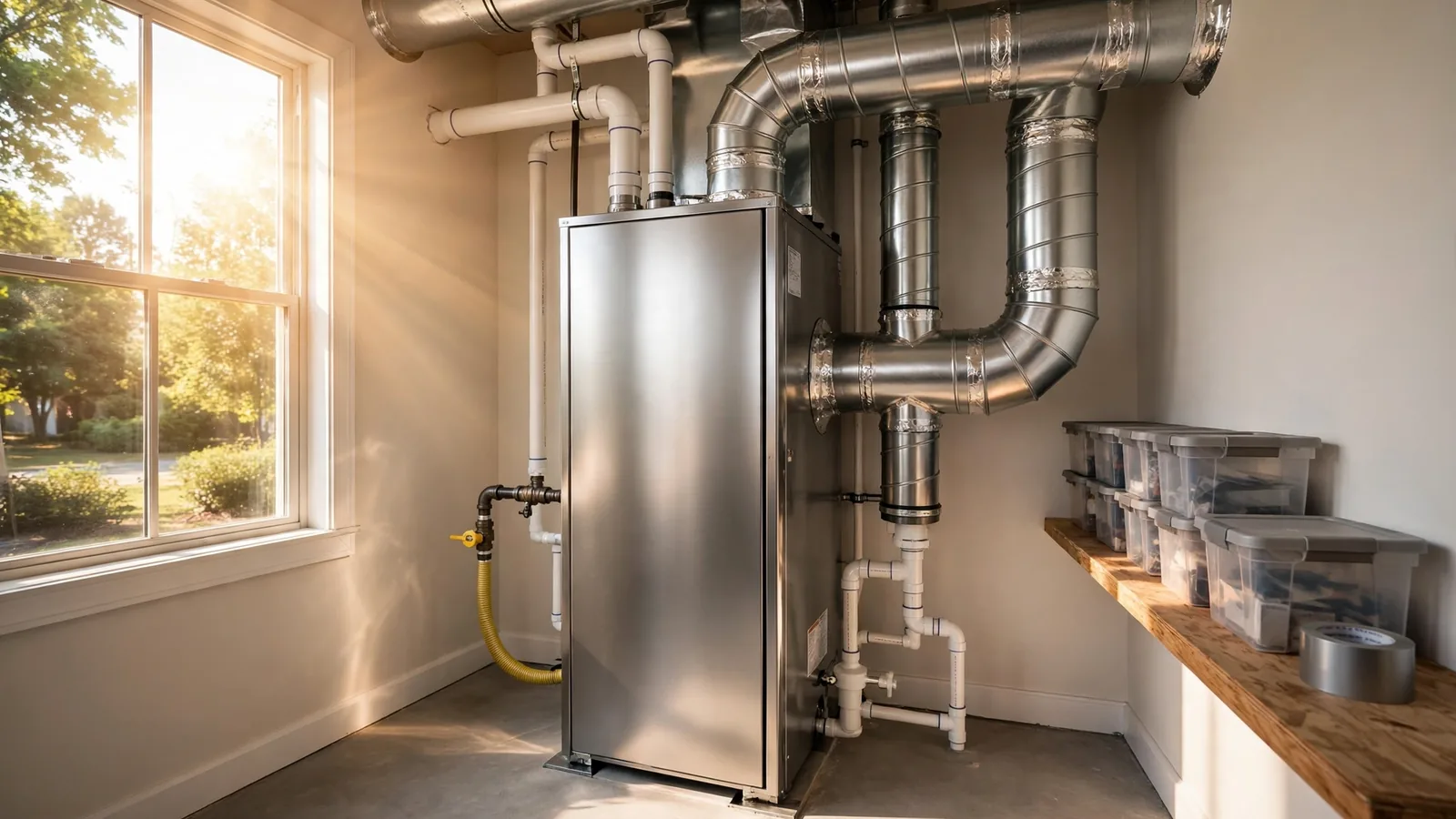
Signs replacement may make more sense than repair
- Your furnace is 15 to 20 years old or older and breaking down repeatedly
- Repairs have been needed more than once in a single heating season
- An inspection found a cracked heat exchanger or another safety problem
- Parts for your model have been discontinued, so failures can't be fixed
- Heating has become uneven or unreliable despite repairs that addressed the causes
- Burner flames stay yellow and dirty after cleaning — combustion that won't correct
How a replacement assessment works
1. Full inspection of the current system
Your provider examines the whole unit: age and model, heat exchanger condition, burner and ignition state, blower health, and the repair history you know about. The assessment covers what's failing, what's worn, and what's still sound.
2. Straight findings, in writing
You get the findings plainly: what can be repaired and for how long that repair is likely to hold, what cannot be repaired, and any safety issues that change the decision. In writing — so you can think it over without a sales clock running.
3. If replacement makes sense
Your provider explains the sizing for your home's size and layout, how a new unit connects to your existing ductwork and venting, and what the installation involves. Take the time you need — the written assessment doesn't expire when the visit ends.
4. Installation and walkthrough
If you go ahead, your provider handles the removal, installation, and testing, then walks you through the new system's controls, filter, and care before leaving. The new furnace gets run through full heating cycles and its safety controls verified.
Replacing a furnace in Layton
Layton is hitting a replacement wave: the furnaces installed in the 1990s and 2000s build booms — in both the older neighborhoods and the east-bench subdivisions — are reaching end of life in the same years, and long Wasatch Front winters have put serious run hours on all of them. Local details your provider will factor in: basement mechanical rooms vary in access and clearance, which shapes what fits; high-efficiency condensing furnaces need condensate drain routing that won't freeze in unheated corners, a real Utah consideration; and sizing has to respect inversion cold snaps, when the valley floor sees the coldest air in the region. An assessment grounded in these houses beats a generic recommendation every time.
Need furnace replacement guidance in Layton?
One call connects you with a local technician. No forms.
(555) 234-5678📞 Call Now